
China Top Fusion Surgical Instrument Manufacturers?
China’s fusion surgical instrument sector has grown from a low-cost production base into a competitive medical technology field. Manufacturers now supply spinal cages, fixation systems, retractors, trial implants, and specialized instruments for hospitals worldwide. Yet product volume does not prove clinical value. Design accuracy, material consistency, sterilization control, and surgeon usability matter more than a polished catalog.
Spine surgeon Dr. J. Kenneth Burkus described the purpose of interbody procedures as “to restore disc height, decompress neural elements, and achieve a solid fusion.” That principle should guide any review of China’s leading manufacturers. A reliable supplier must connect engineering decisions with real surgical needs. Small details matter, such as a cage’s insertion angle, the grip of a screwdriver, or the clarity of implant markings under operating-room lights.
This overview examines manufacturers through practical and verifiable criteria. These include quality-management certification, regulatory documentation, production experience, research investment, clinical feedback, and after-sales support. It also considers whether companies can provide consistent batches, traceable materials, and customization without compromising safety. Some rankings remain imperfect because public clinical data can be limited. That deserves caution.
A strong manufacturer is not simply the one offering the lowest quotation. It should communicate clearly, respond to technical questions, and support surgeons after delivery. Buyers should verify current approvals and product specifications independently. The following discussion highlights China-based companies that demonstrate meaningful capability in the fusion surgical market, while recognizing that manufacturing strength must ultimately support dependable patient care.
What Are Fusion Surgical Instruments and How Are They Used?
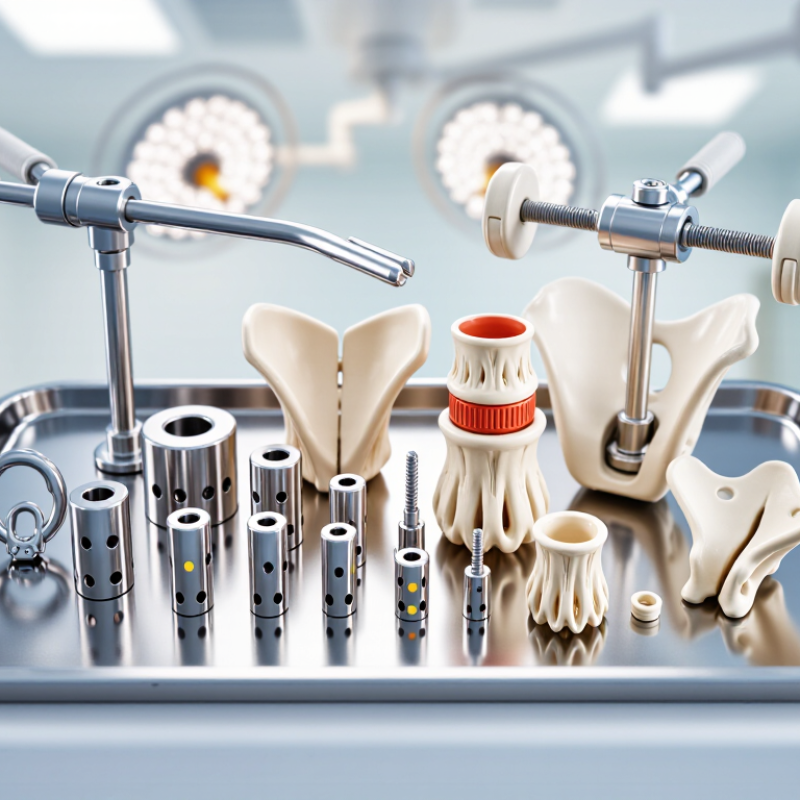
Fusion surgical instruments are designed to help stabilize two or more bones so they can heal together. In spinal procedures, for example, surgeons may use instruments to prepare bone surfaces, position implants, and hold them in place. The exact tools depend on the anatomy and the planned operation.
Common instruments include bone rongeurs, curettes, drills, and implant holders. A curette can remove tissue from a small area, while a drill creates a pathway for screws. Surgeons may also use rods, plates, or cages as implants; these are not instruments, though they work alongside them. A tray is checked for the right sizes and sterile condition before use. Details matter.
Fusion instruments do not make bones join instantly. They support alignment and stability while healing takes place over time. Their use requires imaging, careful handling, and clinical judgment. Even a well-designed tool can be awkward in a narrow surgical field, so teams assess access and fit before proceeding. The instruments assist the procedure; they do not replace the surgeon’s training or follow-up care.
China Top Fusion Surgical Instrument Manufacturers? - What Are Fusion Surgical Instruments and How Are They Used?
Fusion surgical instruments are tools used in procedures that join bones, commonly spinal fusion. The instruments below are organized by typical function; actual instrument selection depends on the procedure, anatomy, and the surgeon’s technique.
| Instrument category | Typical examples | How it is used | Common design or material considerations |
|---|---|---|---|
| Access and exposure | Retractors, dilators, access instruments | Help create and maintain a surgical working corridor to the target area. | May be designed for a particular approach and intended level of visualization; dimensions and compatibility should be checked against the procedure system. |
| Bone preparation | Curettes, osteotomes, rasps, and rongeurs | Remove or shape bone and prepare surfaces, as required by the surgical plan. | Working-end geometry, edge durability, and control are important; reusable instruments require validated cleaning and sterilization processes. |
| Disc-space preparation | Disc shavers, scrapers, and endplate preparation tools | Assist with removing disc material and preparing adjacent vertebral surfaces during certain spinal fusion procedures. | Tool size and shape must suit the surgical approach and anatomy; use is guided by the operative technique and instructions for use. |
| Graft handling and delivery | Graft holders, funnels, and delivery instruments | Help place bone graft or graft substitute at the intended site. | Design may support controlled delivery through an open or minimally invasive access route; instruments should be used only with compatible materials and methods. |
| Implant insertion | Cage inserters, trial spacers, and impactors | Assist with assessing fit and positioning an interbody implant where applicable. | Connection features and dimensions are generally specific to the implant system; verify compatibility before use. |
| Fixation and alignment | Screwdrivers, rod holders, reducers, and torque-limiting tools | Assist with placing and assembling fixation components used to stabilize the intended fusion segment. | Drivers and torque tools must match the relevant components; follow the system’s specified assembly and tightening instructions. |
| Imaging and guidance accessories | Radiographic markers and navigation-compatible instruments | Support visualization or instrument tracking when used with appropriate imaging or navigation equipment. | Compatibility, visibility, and calibration requirements vary by equipment and instrument; confirm them before the procedure. |
| Manufacturing and quality checks | Dimensional inspection, material verification, surface-finish checks, and functional testing | Help confirm that instruments meet documented design requirements and perform as intended. | Evaluation should consider applicable regulatory requirements, traceability, validated reprocessing instructions, and compatibility with intended implants and equipment. |
Note: This overview is for general educational purposes, not a clinical recommendation or a ranking of manufacturers. Consult the applicable instructions for use and qualified clinical professionals for product selection and use.
Related Posts
-

10 Best Techniques for Posterior Lumbar Interbody Fusion?
-

2026 How to Understand Disc Fusion for Effective Spine Recovery?
-

China Top Fusion Surgical Techniques Advancements and Trends?
-

How to Choose the Right Anterior Cervical Cage for Your Needs?
-
How to Choose Lateral Lumbar Interbody Fusion Systems in 2026?
-
How to Choose Lumbar Interbody Fusion Implants in 2026?