China’s cervical interbody fusion market has expanded rapidly, supported by advanced machining, biomaterials, and growing orthopedic expertise. This article reviews ten notable Chinese manufacturers serving the cervical interbody fusion field. It considers product design, material selection, manufacturing consistency, quality systems, and market experience.
Dr. K. Daniel Riew, a widely recognized cervical spine surgeon, describes the surgical objective clearly: “The goal is to relieve pressure on the spinal cord and nerves.” That principle should guide every evaluation. A compact implant may look impressive in a product photograph. However, surgeons also need reliable sizing, controlled insertion, radiographic visibility, and predictable anatomical fit. Surface technology matters too. So does evidence.
The companies discussed here may differ in scale, international reach, and clinical documentation. Some focus on titanium or PEEK implants. Others provide integrated cervical systems, instruments, or customized solutions for hospitals. Regulatory approvals and quality certifications deserve careful checking. Marketing claims alone are not enough. No ranking is flawless, especially when public data varies between manufacturers. That limitation should remain visible.
Readers should treat this overview as a research starting point, not medical advice or a purchasing decision. Hospitals and surgeons must verify current certifications, technical files, clinical evidence, and local regulatory requirements. Supplier audits can reveal practical details, including packaging quality, traceability, and response time. Small details often matter. A strong manufacturer combines engineering discipline with transparent communication, because cervical surgery leaves little room for careless assumptions.
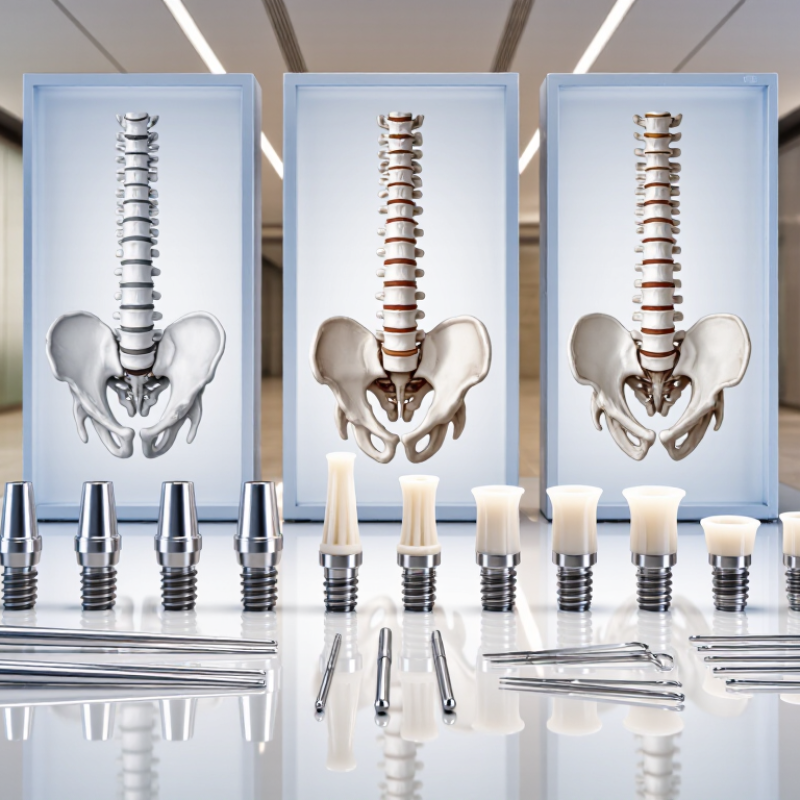
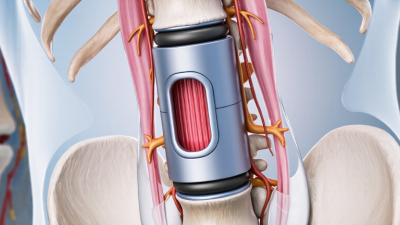
Cervical interbody fusion devices are small implants placed between damaged neck vertebrae. They help maintain disc height after the diseased disc is removed. The restored space may reduce nerve pressure and support spinal alignment. Most devices are shaped as cages, with openings for bone graft material. Over time, the graft can form a solid bridge between neighboring vertebrae.
Common materials include titanium, medical-grade polymers, and composite structures. Each material behaves differently under load. Some polymer cages allow clearer imaging after surgery. Titanium may provide strong fixation, but it can create more imaging interference. Many implants include teeth, textured surfaces, or locking features to resist movement. Tiny radiographic markers help surgeons locate the device on X-rays.
Device selection depends on anatomy, bone quality, surgical level, and the surgeon’s experience. A taller cage is not automatically better. Excessive height may stress nearby bone, while insufficient height may fail to restore alignment. Evidence should include manufacturing controls, fatigue testing, sterilization records, and clinical follow-up. In China’s growing manufacturing sector, these details matter more than attractive product claims. A promising design is not proof of better patient outcomes. Long-term data can still be limited. Careful evaluation remains necessary.
Evaluating Chinese cervical interbody fusion manufacturers requires more than comparing catalog prices. In my experience, reliable assessment begins with product design, material control, and evidence supporting clinical use. Examine whether the manufacturer uses validated implant materials and controlled machining processes. Ask for dimensional inspection records, sterilization documentation, and batch traceability. A polished website proves very little.
Review the company’s quality management system and manufacturing history. Confirm whether independent audits cover critical production areas. Check how engineers manage design changes, supplier qualification, and nonconforming products. Request technical files that explain implant geometry, surface treatment, and mechanical testing. Clear answers matter. Vague replies deserve caution.
Clinical feedback should also influence the evaluation. Speak with qualified surgeons about insertion feel, imaging visibility, graft containment, and instrument handling. Study published data carefully, while recognizing that laboratory performance does not guarantee clinical success. No factory is flawless. A capable manufacturer should openly discuss limitations and corrective actions. Ask harder questions about complaint handling, delivery consistency, and post-market support. Language barriers can slow this process, so written specifications and bilingual technical contacts are valuable. Price remains relevant, but unusually low pricing may reflect thinner validation, weaker traceability, or unstable suppliers. The most dependable choice is usually the manufacturer that documents its decisions clearly and accepts careful scrutiny.
A fact-based evaluation framework for comparing cervical interbody fusion device suppliers without displaying company or brand names
| No. | Evaluation Dimension | What to Verify | Relevant Standard or Regulatory Reference | Recommended Assessment |
|---|---|---|---|---|
| 1 | Quality Management System | Confirm that the manufacturing site maintains a current medical-device quality certificate, controlled procedures, complaint handling, CAPA, internal audits, and management review records. | ISO 13485:2016; applicable Chinese medical-device manufacturing regulations. | Pass only with valid, scope-matched certification and audit evidence. |
| 2 | Chinese Market Registration | Check the NMPA registration status, approved product model, intended use, manufacturing address, certificate validity, and consistency between the registered device and supplied samples. | NMPA registration requirements; cervical interbody fusion cages are generally regulated as high-risk implantable devices and classification should be verified against the current catalogue. | Required for lawful domestic supply; verify certificate details directly. |
| 3 | Implant Material Control | Review incoming-material certificates, lot traceability, material composition, supplier qualification, machining records, and surface-treatment controls. | PEEK implant materials: ASTM F2026; titanium and titanium-alloy materials may be assessed against ASTM F67 or ASTM F136, as applicable. | Require material certificates and independent verification for critical lots. |
| 4 | Design and Dimensional Consistency | Evaluate implant height options, lordotic angles, footprint selection, graft windows, radiographic markers, instruments, drawing control, and inspection methods. | Approved product drawings, validated inspection procedures, geometric tolerancing, and applicable NMPA technical requirements. | Compare measured samples with approved drawings, not marketing specifications alone. |
| 5 | Mechanical Performance | Request evidence for static compression, subsidence resistance, fatigue performance, expulsion resistance, and construct-specific testing where relevant. | ASTM F2077 for intervertebral body fusion devices; ASTM F2267 for subsidence testing, where applicable. | Require complete test reports with specimen configuration, loading conditions, and failure criteria. |
| 6 | Biocompatibility and Biological Safety | Confirm that the finished device, coatings, residues, and processing chemicals have been assessed for the relevant contact type and duration. | ISO 10993 biological evaluation series; assessment should be based on the final finished device. | Accept only traceable reports covering the actual material and manufacturing process. |
| 7 | Sterilization and Packaging | Determine whether the product is supplied sterile or non-sterile, and verify sterilization validation, residual limits, packaging integrity, shelf-life, and transport simulation. | ISO 11135 for ethylene oxide sterilization; ISO 11137 for radiation sterilization; ISO 11607 for sterile-barrier packaging. | Require validated sterilization and packaging records for every commercial configuration. |
| 8 | Clinical and Regulatory Evidence | Review clinical evaluation, risk management, literature analysis, post-market surveillance, adverse-event procedures, and evidence supporting the specific indication. | ISO 14971 risk management; NMPA clinical-evaluation requirements; EU MDR 2017/745 when European distribution is intended. | Prioritize evidence linked to the exact device, indication, and patient population. |
| 9 | Manufacturing Capability and Traceability | Audit machining, cleaning, inspection, environmental controls, equipment calibration, batch records, nonconformance control, and lot-level traceability. | ISO 13485:2016; applicable clean-processing, calibration, and traceability procedures. | Conduct an on-site or qualified third-party audit before approval. |
| 10 | Export Readiness and After-Sales Support | Verify export-market registrations, technical documentation, labeling, language support, complaint response time, product training, spare instruments, and recall capability. | EU MDR 2017/745, U.S. FDA requirements, local importer obligations, and destination-market labeling rules. | Select suppliers with documented regulatory ownership and written service-level commitments. |
China’s cervical interbody fusion sector is expanding with domestic spinal surgery demand. Grand View Research reported steady global market growth through 2030, supported by aging populations and improved surgical techniques. China’s National Health Commission also recorded continued growth in hospital-based orthopedic procedures. These trends create space for local manufacturers.
A practical top-ten review should examine more than production volume. Key measures include NMPA registration status, implant materials, cage design, clinical evidence, quality systems, and surgeon feedback. Many Chinese manufacturers now offer porous titanium, PEEK, and 3D-printed structures. These designs can support radiographic assessment and bone integration. Yet product performance varies across hospitals.
The China Orthopedic Implant Industry Report indicates that domestic suppliers are increasing their share of high-value orthopedic devices. Pricing remains competitive. However, public data often combine cervical and lumbar products, which weakens direct comparisons. That is an important limitation. Buyers should verify revision rates, sterilization records, packaging integrity, and long-term follow-up evidence. A manufacturer may appear strong on registration numbers but weaker in published clinical research. Careful evaluation still matters.
China Top 10 Cervical Interbody Fusion Manufacturers: Product Technologies and Manufacturing Capabilities
China’s leading cervical interbody fusion manufacturers increasingly combine PEEK molding, titanium alloy machining, and porous-surface engineering. Radiolucent PEEK supports postoperative imaging, while tantalum markers improve implant positioning. Some facilities now use additive manufacturing to create trabecular-like titanium structures. The geometry looks convincing. Clinical proof still matters more.
MarketsandMarkets estimates the global spine surgery devices market will grow from about USD 14 billion in 2023 to nearly USD 20 billion by 2028. This expansion pressures manufacturers to improve both production speed and verification. Serious suppliers should show ISO 13485 systems, validated molding, five-axis machining, and documented dimensional inspection. Compression and subsidence testing should follow relevant ASTM methods. Traceability must reach each material batch and sterilization cycle.
A practical comparison of China’s top ten candidates should examine cage designs, fixation options, imaging compatibility, and surgical instruments together. Manufacturing depth is visible in details: controlled pore size, smooth endplates, consistent graft windows, and low-burr edges. Computerized tomography can support anatomical customization, but customization may increase validation complexity. That trade-off is often underestimated. The FDA’s spinal implant guidance also emphasizes biocompatibility, mechanical performance, and fatigue evaluation, offering useful benchmarks beyond domestic registration requirements. Industry rankings can still mislead when they count sales rather than clinical evidence. Surgeons and procurement teams should review test reports, complaint handling, and post-market data before trusting attractive technology claims.
Representative bulk densities of materials commonly used in cervical interbody fusion devices. The comparison highlights material selection rather than company or brand performance.
PEEK offers a radiolucent polymer platform, titanium alloys support high structural strength and additive manufacturing, and porous tantalum is used where high porosity and bone-ingrowth potential are required. Values are approximate bulk-material densities; porous structures can vary substantially with design and processing.
China’s cervical interbody fusion manufacturers operate under demanding regulatory and clinical expectations. In China, manufacturers typically need NMPA registration, a documented quality system, and evidence for material safety, mechanical strength, and sterilization. ISO 13485 supports process control, while ASTM F2077 and ASTM F2267 guide static and subsidence testing. Export markets may require separate conformity assessments.
Testing is not clinical proof. A cage may show excellent compressive strength yet perform poorly in osteoporotic bone. AHRQ’s HCUP Statistical Brief No. 209 reported 465,000 inpatient spinal fusion procedures in the United States during 2011, a 2.4-fold increase from 1998. That figure shows demand, but it does not prove that every newer implant improves patient outcomes. Surgeons still assess alignment, bone quality, neurological symptoms, graft handling, and imaging evidence.
Market comparisons should examine more than unit price. Grand View Research’s 2024 spinal implants analysis projects continued global growth through the decade, supported by degenerative disease and aging populations. However, growth estimates vary by dataset and geography. That weakness matters. Buyers should review published clinical follow-up, revision rates, radiolucency, instrument compatibility, and complaint histories. A manufacturer with limited long-term data may still offer promising engineering, but confidence should remain provisional. Procurement teams need traceable evidence, not polished catalog language.