How to Choose the Best Cervical Cages for Global Sourcing

Choosing the right cervical cages for global sourcing requires more than comparing prices, sizes, or attractive product brochures. It demands clinical judgment, engineering discipline, and careful supplier verification. The United Nations’ World Population Prospects 2022 projects that one in six people worldwide will be aged 65 or older by 2050. This demographic shift may increase demand for dependable spinal care, including anterior cervical fusion systems. The opportunity is significant. So is the responsibility.

A practical sourcing review should examine cage geometry, radiographic markers, graft space, subsidence resistance, and material traceability. Titanium, PEEK, and porous-coated designs can behave differently under load and during imaging. The FDA’s Guidance for Industry and FDA Staff on Spinal System 510(k)s highlights the importance of biomechanical testing, material characterization, and substantial equivalence evidence. ISO 13485 certification also matters, but certification alone does not prove consistent production. Audits should inspect machining controls, cleaning validation, packaging, sterilization records, and complaint handling. Small gaps can become expensive problems.

The WHO Global Atlas of Medical Devices emphasizes uneven access to safe, effective medical technologies across regions. Therefore, global sourcing must consider regulatory pathways, local registration, surgeon training, and post-market surveillance. A reliable supplier should provide lot-level documentation and respond clearly to technical questions. Not every low-cost option is inefficient. Not every premium option is superior. A stronger decision may come from a weighted matrix combining clinical evidence, quality history, lead time, total landed cost, and service support. No matrix is perfect. Buyers should challenge their assumptions before selecting cervical cages for long-term international use.
How to Choose the Best Cervical Cages for Global Sourcing

Map Clinical Requirements: ACDF Levels, Footprints, and 3–6° Angles

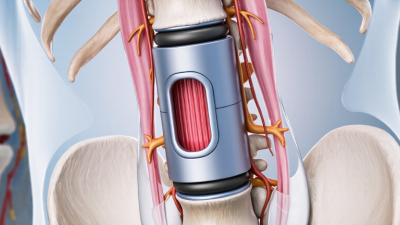
Choosing cervical cages for global sourcing starts with the clinical map, not the catalog. ACDF may involve one, two, or three levels, and each level changes the required footprint and height. A 2023 NASS guideline emphasizes restoring cervical alignment while avoiding excessive distraction. Therefore, sourcing teams should compare anterior-posterior depth, medial-lateral width, and available heights using real operative measurements. A cage that fits C5–C6 may overhang at C3–C4.

Angle selection also deserves discipline. Lordotic options between 3 and 6 degrees can support segmental alignment, but the ideal angle depends on the patient’s anatomy, surgical level, and adjacent segments.

Data from the AHRQ Healthcare Cost and Utilization Project show sustained growth in cervical fusion utilization, increasing the need for consistent, scalable implant specifications. Still, volume does not replace clinical judgment. More angle is not always better.

Tips: Build a level-by-level matrix. Include footprints, heights, angles, graft volume, radiographic markers, and imaging evidence. Request dimensional inspection records and sample-fit reviews before larger orders. The ISO 10993 framework can guide biological evaluation, while ISO 13485 supports quality-system assessment. Do not rely on drawings alone. A clean catalog can hide poor endplate contact. I would also recheck the 3–6° range with surgeons, because my initial assumptions may miss regional technique differences.

Compare Cage Materials: PEEK at 3.6 GPa Versus Titanium at 110 GPa

How to Choose the Best Cervical Cages for Global Sourcing

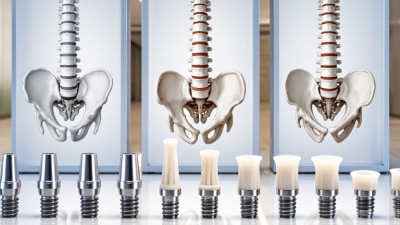
Material stiffness changes how a cervical cage transfers load. PEEK has an elastic modulus near 3.6 GPa, while titanium is approximately 110 GPa. That difference is substantial. PEEK is closer to bone than titanium, potentially reducing stress shielding and improving load sharing. However, modulus alone cannot predict clinical performance. Cage geometry, endplate contact, and surgical preparation remain decisive.

Titanium offers high strength and strong surface integration potential. Its stiffness can also increase local stress at the endplates, especially with a small contact area. PEEK is radiolucent, allowing clearer assessment of graft bridging on follow-up imaging. Titanium may create more imaging artifacts, although porous or surface-treated designs can support bone attachment. These trade-offs should be reviewed beside data from ASTM F2077 testing, including compression, compression-shear, and subsidence results.

The numbers are not the whole story. A 2023 review in the European Spine Journal reported that subsidence findings vary with implant design, bone quality, and surgical technique, not material alone. FDA spinal-device guidance also expects evidence for mechanical performance, biocompatibility, and manufacturing controls. For global sourcing, request lot-level modulus data, surface specifications, sterilization validation, and traceability records. Check the exact PEEK grade. “PEEK” is too broad. A cage with excellent laboratory strength may still perform poorly against a fragile endplate. That assumption deserves scrutiny.

Verify Mechanical Testing: ASTM F2077, F2267, and Fatigue Data

When sourcing cervical cages globally, mechanical evidence deserves more attention than polished product photographs. Request complete reports showing the test standard, device dimensions, material, and manufacturing lot. ASTM F2077 can support evaluation of static and fatigue behavior under defined loading modes. The report should identify fixtures, loading rates, sample numbers, and failure criteria. Numbers can mislead.

ASTM F2267 is especially relevant to axial compression subsidence strength. Ask how the endplate substitute was selected and whether its density reflects clinical conditions. A high load result may not represent performance in softer bone. Review displacement curves, not only the final strength value. Small differences in cage footprint can also change the result.

Fatigue data needs careful reading. Check the applied load range, cycle count, frequency, run-out definition, and specimens that failed early. Ask whether testing used production-equivalent parts, including surface treatment and sterilization effects when relevant. Raw data and photographs of failures add credibility. So does lot traceability.

I have seen sourcing teams accept a certificate without checking the protocol version. That is a weak shortcut. Confirm the current ASTM edition and any laboratory deviations in writing. Independent laboratory testing is useful, but independence does not replace technical review. A qualified engineer should compare the evidence with the intended anatomy, surgical approach, and expected loading environment. Nakne

Screen Suppliers: ISO 13485, ISO 10993, and SAL 10⁻⁶ Compliance

Choosing cervical cages for global sourcing requires more than comparing price, surface finish, and delivery time. Supplier certificates deserve close inspection. The ISO Survey 2021 recorded more than 26,000 ISO 13485 certificates worldwide, but a certificate alone proves limited capability. Ask for the current scope, audit status, process locations, and nonconformity records. A supplier should connect design controls, machining, cleaning, packaging, and traceability within one quality system. Request lot-level records, not polished sample files.

Biological safety needs equal attention. ISO 10993-1:2018 requires a risk-based evaluation based on materials, tissue contact, and contact duration. For a cervical cage, request material identity, chemical characterization, cytotoxicity, sensitization, irritation, and implantation evidence when applicable. Do not accept “biocompatible” as a complete answer. It is too vague. Sterilization claims also need evidence. ISO 11137-1 and ISO 17665-1 recognize a sterility assurance level of 10⁻⁶ for validated terminal sterilization processes. Review dose audits, bioburden trends, packaging integrity, and requalification intervals. The 2023 WHO Global Medical Devices report emphasizes stronger regulatory capacity and post-market surveillance, which matters when products cross borders. A practical weakness remains: many buyers review documents once, then stop checking. Annual supplier audits, change notifications, and random verification testing can expose quiet process drift. Sometimes, the cheapest supplier creates the most expensive investigation.

Calculate Global Sourcing Costs: MOQ, Lead Time, Duties, and Landed Price

How to Choose the Best Cervical Cages for Global Sourcing

The lowest unit price rarely produces the lowest sourcing cost. I begin with a complete landed-price model for every cervical cage quotation. The model includes unit price, tooling, packaging, inspection, freight, insurance, duties, taxes, and broker fees. A cage priced at $18 may reach $27 after delivery and import charges. Small details matter.

Minimum order quantity can tie up cash and create storage pressure. Ask whether the supplier can support a pilot order before committing to full production. Lead time also needs careful review. Separate material preparation, machining, quality inspection, and shipping time. A quoted 30-day lead time may exclude port delays or final document checks. Get each stage in writing.

Duty rates depend on product classification, destination, origin, and current customs rules. Confirm the classification with a qualified customs broker. Do not estimate from a similar implant. That shortcut can distort the landed price. Request certificates, inspection records, dimensional reports, and material documentation before placing an order. These records help assess consistency and support responsible purchasing decisions.

My first sourcing spreadsheet missed warehouse handling fees. It looked accurate, but it was incomplete. I now test three scenarios: normal freight, delayed freight, and a higher-duty case. This exposes fragile assumptions. Compare suppliers by total risk, not price alone. A dependable cage requires verified specifications, stable production capacity, clear communication, and realistic cost planning.

How to Choose the Best Cervical Cages for Global Sourcing

Calculate global sourcing costs by comparing MOQ, lead time, import duty, logistics, and estimated landed price.

Representative 2025 benchmark estimates for a single sterile cervical cage, shown in USD per unit. Landed price includes the quoted unit cost, international freight and insurance, customs duty, and import handling. Final costs vary by material, implant design, sterilization method, order volume, trade lane, and destination-country tariff classification.