China Best Posterior Fusion Implants for Global Buyers?
Choosing China’s best posterior fusion implants requires more than comparing prices, catalogs, or polished product photographs. Global buyers need evidence of clinical suitability, manufacturing consistency, traceability, and regulatory readiness. The World Health Organization reports that low back pain affected approximately 619 million people in 2020. That figure may reach 843 million by 2050. The demand is substantial.
Still, demand does not prove quality.
Grand View Research valued the global spinal fusion devices market at billions of dollars in recent assessments, with continued growth expected through the decade. However, market expansion can hide important differences between implant systems. Material grade, surface treatment, screw locking, cage geometry, fatigue testing, and sterilization controls deserve close review. A titanium cage should arrive with clear lot information, not only attractive packaging. ISO 13485 certification, product registration, clinical documentation, and post-market surveillance also matter for international purchasing.
Spine surgeon Richard Guyer has often emphasized, “The goal of spine surgery is to make the patient better, not the X-ray better.” That principle keeps posterior fusion focused on patient outcomes rather than hardware appearance. It also challenges buyers to examine whether a supplier provides meaningful clinical evidence, surgeon training, and responsive technical support.
China offers experienced manufacturers and competitive production capacity. Yet “best” is never universal. A product suitable for one anatomy, surgical approach, or regulatory market may be unsuitable elsewhere. Buyers should compare independent test data, surgeon feedback, risk controls, and approval pathways before making a decision. Good procurement is careful, sometimes slow, and occasionally less impressive than expected.
Posterior Fusion Implants: Definition, Purpose, and Clinical Applications
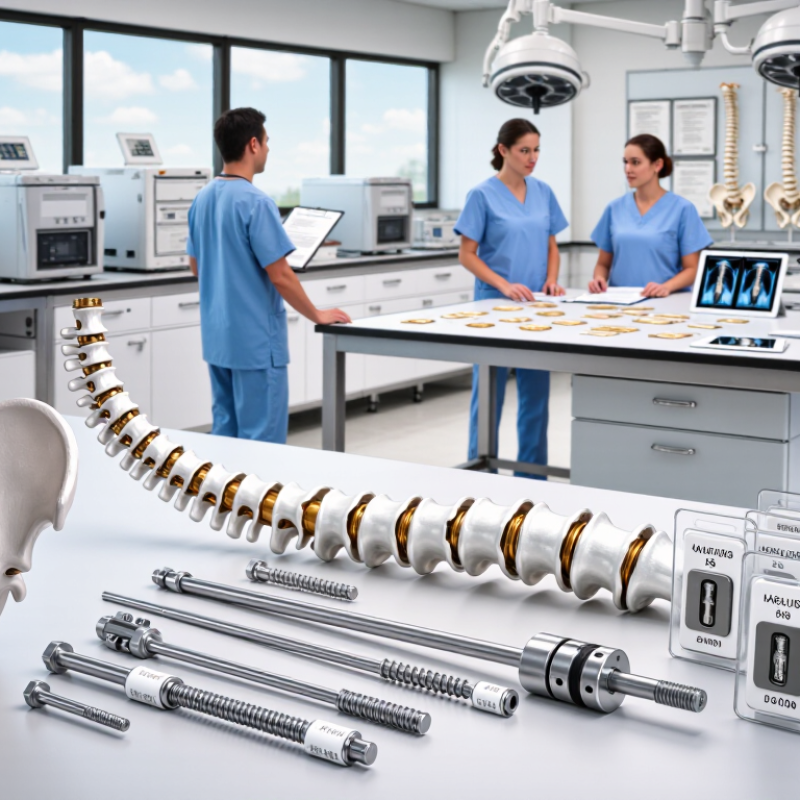
Posterior fusion implants are devices used from the back of the spine to stabilize unstable vertebral segments. Common components include pedicle screws, rods, hooks, and interbody cages. Their purpose is mechanical support while bone fusion develops. This process can take months, and implant stability does not guarantee clinical success.
Clinical applications include degenerative spondylolisthesis, spinal deformity, traumatic fractures, recurrent stenosis, and selected cases of infection or tumor reconstruction. Surgeons may combine decompression with fusion when removing bone could create instability. The World Health Organization reported that low back pain affected about 619 million people in 2020, with cases projected to reach 843 million by 2050. That figure describes disease burden, not fusion demand. The distinction matters.
Evidence remains condition-specific. A 2023 North American Spine Society guideline supports surgical consideration for selected degenerative conditions after appropriate nonoperative care, while warning against routine fusion for uncomplicated low back pain. Implant selection should therefore reflect anatomy, bone quality, surgical access, and imaging findings. Global buyers should review clinical evidence, fatigue testing, sterilization validation, traceability, and quality-system documentation, such as ISO 13485 certification. Specifications can look impressive.
The term “posterior fusion implant” is not perfectly standardized across markets. Product comparisons may hide differences in screw geometry, rod materials, cage design, and evidence quality. Procurement teams should ask for peer-reviewed data, complication reporting, and clear indications rather than relying on catalog language. Even experienced teams can overvalue mechanical strength and undervalue surgical handling.
How to Evaluate Chinese Posterior Fusion Implant Manufacturers
China Best Posterior Fusion Implants for Global Buyers?
For global buyers, evaluating Chinese posterior fusion implant manufacturers requires more than factory photographs. The World Health Organization reported 619 million people lived with low back pain in 2020. It projects 843 million cases by 2050. Demand is growing, but patient safety remains the real benchmark. Grand View Research estimates the global spinal implants market will continue expanding through 2030. Market growth does not prove product quality.
Ask for complete evidence. Request current NMPA registration, ISO 13485 certification, export approvals, and product-specific technical files. Review fatigue, torsion, pullout, subsidence, and corrosion test reports. Check whether independent laboratories performed these tests. A polished brochure is not evidence. Ask for records.
Inspect traceability closely. Each screw, rod, and cage should carry a readable lot code. Packaging should show sterilization status, expiry controls, and storage conditions. Review complaint data, recall history, CAPA records, and supplier audits. For titanium implants, request material certificates and biocompatibility evidence under ISO 10993. Clinical follow-up matters too. Seek radiographic outcomes, fusion rates, revision rates, and study protocols, not only surgeon testimonials.
Price deserves caution. A lower quotation may reflect efficiency, but it may also hide weaker documentation. I would verify production consistency through an on-site audit and sample testing. Imperfect records need explanation, not excuses. Ask whether the manufacturer can support surgeon training, inventory continuity, and adverse-event reporting in your market.
Quality Standards, Regulatory Compliance, and Product Verification
China Best Posterior Fusion Implants for Global Buyers?
Selecting posterior fusion implants requires more than comparing price, alloy, and delivery dates. A credible supplier should provide material certificates for titanium or cobalt-chromium components. Ask whether testing follows relevant ISO, ASTM, or national requirements for the target market. ISO 13485 certification supports controlled manufacturing, but it does not prove every product is suitable. Check the certificate scope, issuing body, expiry date, and covered production site. Small details matter.
Product verification should connect documents with physical samples and shipment records. Inspect labels, lot numbers, UDI information, sterilization status, and package integrity before acceptance. Request mechanical test reports, biocompatibility evidence, sterilization validation, and shelf-life data. Reports should identify the exact model, material, test method, laboratory, and date. A generic report is weak evidence. For regulated markets, confirm registration, listing, or conformity requirements with the relevant authority before purchasing. Do not treat a CE mark or other symbol as universal approval.
Reliable procurement also includes supplier audits, complaint handling, recall procedures, and traceability exercises. Ask for a sample lot and compare it against approved drawings. Measure screw dimensions and inspect thread quality. Packaging should arrive dry, sealed, and undamaged. Some suppliers may answer slowly or provide incomplete files. That is a warning, not merely an inconvenience. Document every gap and request correction before clinical distribution. No checklist replaces qualified clinical and regulatory review.
Posterior Fusion Implants: Quality, Regulatory, and Verification Milestones
The chart shows key publication or implementation milestones relevant to quality management, risk management, biological evaluation, regulatory compliance, and product verification. These references support due diligence but do not replace product-specific testing, technical documentation, or market authorization.
Global Purchasing, Pricing, Logistics, and Supplier Support
China Best Posterior Fusion Implants for Global Buyers?
Global Purchasing, Pricing, Logistics, and Supplier Support
Demand is growing as spinal disorders affect more people worldwide. The Lancet Rheumatology reported that low back pain affected about 619 million people in 2020. Its forecast reaches 843 million by 2050. This pressure makes posterior fusion implants an important procurement category for hospitals and distributors.
Price comparisons should include more than the implant quote. Buyers should review material certificates, sterilization status, instrument availability, packaging, and replacement policies. A lower unit price can become expensive after freight, customs handling, inspection, and delayed surgery schedules. It happens. Supplier quotations should show product codes, sizes, lead times, minimum order quantities, and warranty terms. Definitions also differ between market reports, so buyers should treat market forecasts as directional rather than exact.
Logistics deserves equal attention. The World Bank’s 2023 Logistics Performance Index assessed 139 economies across customs, infrastructure, shipment quality, and timeliness. These factors influence delivery reliability for medical components. Experienced suppliers should provide batch traceability, export documentation, temperature and moisture controls, and responsive technical support. Buyers can request sample documents before placing large orders. That small test may reveal weak systems. Supplier support should also cover surgical instrument training, complaint handling, stock planning, and communication across time zones. Local regulatory review remains essential before clinical use, because approval requirements vary by destination.